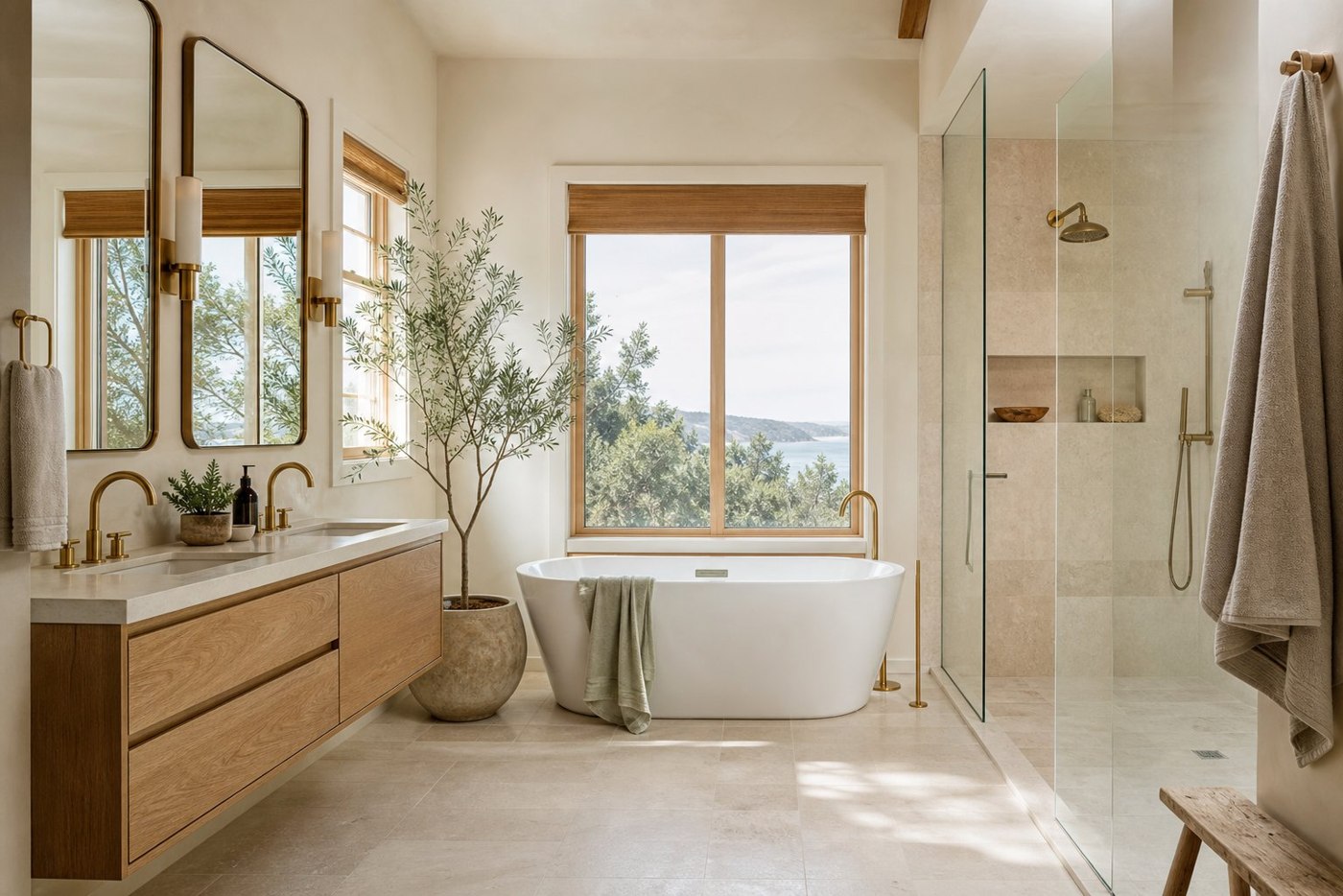
A bathroom can be practical without feeling purely functional. With thoughtful planning, it can become a calm place to begin the day and a comfortable space to slow down.
The most restorative bathrooms are not defined by a particular style. They work beautifully for the people who use them. Before choosing tile or taps, think about what feels awkward now, what needs to be easier, and what would help the room feel more settled.
Plan around your everyday routine
Notice how you move through the room. Is there somewhere convenient to place a towel? Can you reach what you need without opening every drawer? Does the door or a fixture make the space feel crowded?
A purposeful layout can make more difference than a decorative upgrade alone. Consider circulation, access, and future needs alongside the positions of plumbing and electrical services. Moving these elements can change the scope of the project, so discuss feasibility before settling on a layout.
Give storage a proper place
Calm often comes from knowing where things belong. Plan storage for the items you actually use, and make everyday essentials easy to reach. A mix of concealed storage and a little open space can help the room feel both organised and personal.
- Keep frequently used items close to where you need them.
- Choose cabinetry suited to a humid environment.
- Consider accessible handles and comfortable reach.
- Leave room for cleaning and ongoing maintenance.
Bring warmth through texture
Natural-looking wood, gently textured surfaces, and soft textiles can balance the harder finishes a bathroom needs. A restrained palette lets those textures do the work without making the room feel busy.
Appearance should be considered alongside suitability. Ask about wet-area use, slip resistance, sealing, cleaning requirements, and durability before choosing a surface. Samples can help you understand how finishes look together under the lighting you plan to use.
A retreat is less about adding more and more about making room for what feels good.
Make lighting feel intentional
Useful light around a mirror and softer ambient light serve different purposes. Consider where light falls, whether it creates shadows, and how the room will feel at different times of day.
Bathrooms need lighting and electrical equipment appropriate to their location and local requirements. Work with qualified professionals to choose and install suitable fixtures safely.
Don't overlook the invisible essentials
Ventilation, waterproofing, drainage, and the condition of underlying surfaces help a bathroom remain comfortable and usable. These details deserve attention before the visible finishes go in.
If there are signs of dampness, damaged surfaces, or recurring mould, investigate the cause rather than covering it. A beautiful room depends on a sound foundation.
Keep the whole room in mind
Bring the layout, storage, materials, lighting, and practical requirements into a coordinated plan. Decide what matters most, then discuss a clear scope before work begins.
The result you are aiming for is not simply a picture-perfect bathroom. It is a space that supports your routine, feels comfortable, and quietly invites you to take a breath.