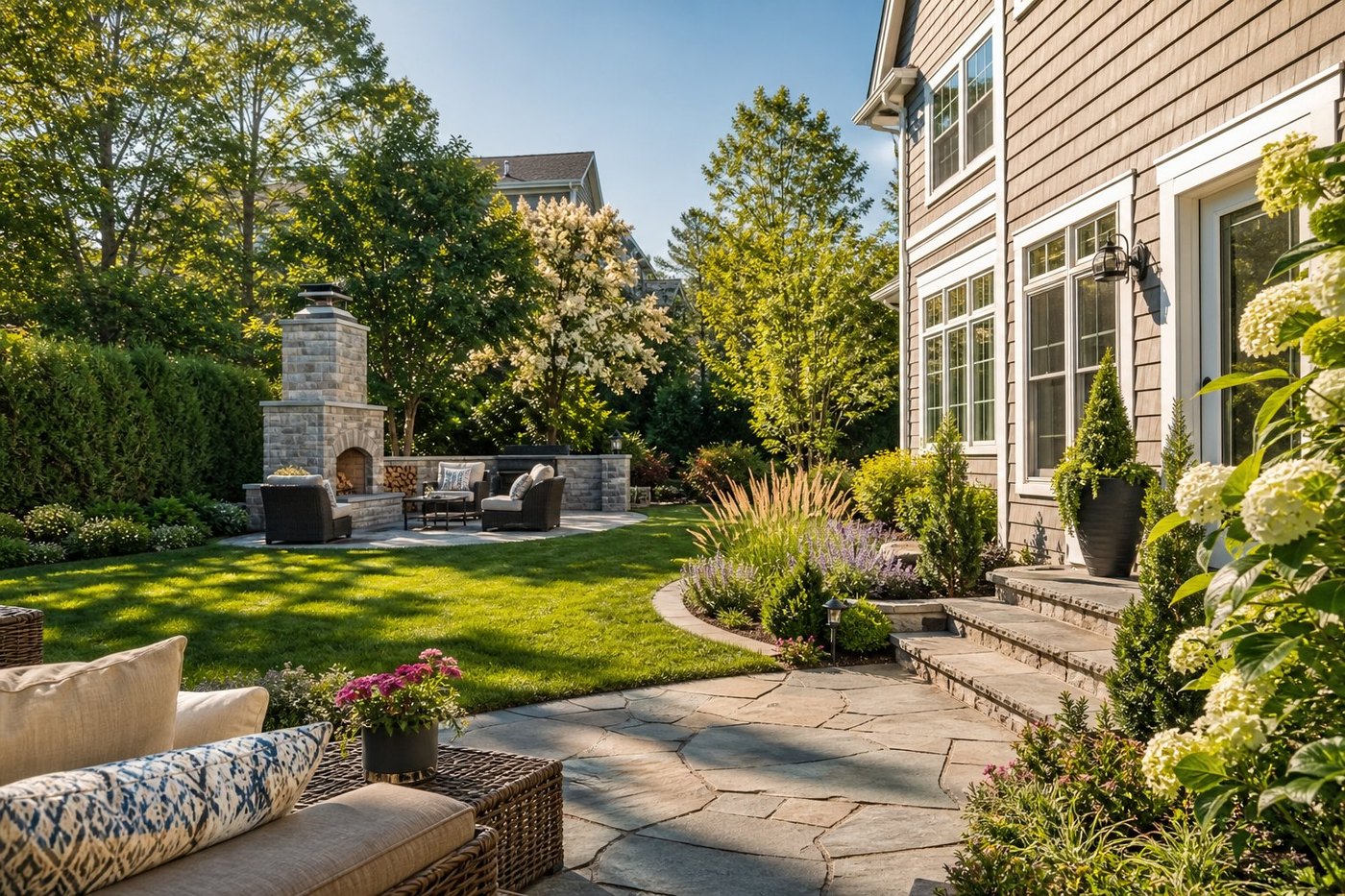
A welcoming exterior does more than look beautiful from the street. It makes the everyday return home feel comfortable, considered, and unmistakably yours.
Before choosing plants or paint, take a moment to notice how you use the space around your home. Where do you enter? Where does rain collect? Is there a comfortable place to pause, or does the garden feel disconnected from the way you live? These observations can help you plan improvements with purpose.
Begin with the route to your door
A clear, comfortable approach helps the whole exterior feel more welcoming. Consider the condition of paths, steps, handrails, and the area around your entry. Look for loose surfaces, drainage problems, or planting that narrows the route.
Materials should suit both your home's character and the conditions they will face. A qualified professional can help assess structural issues or drainage concerns before a decorative refresh hides a problem.
Let the house guide the palette
Your exterior already has a visual language. The roof, window frames, siding, and surrounding landscape offer useful clues when choosing complementary finishes. Rather than treating each element as a separate decision, look for a calm relationship between them.
- Use your home's existing materials as a starting point.
- View finish samples outdoors in changing light.
- Choose planting that works with the site and local conditions.
- Keep maintenance needs realistic for your routine.
The most inviting garden isn't always the most elaborate. It's the one that makes you want to step outside.
Create space for the way you unwind
A garden can be a place for conversation, quiet reading, outdoor meals, or simply enjoying fresh air. Think about the activities you want to make room for, then shape a comfortable place around them.
Seating, shelter, privacy, and easy access matter as much as appearance. If your garden feels unused, a more purposeful layout may be more valuable than adding another decorative feature.
Consider light with care
Outdoor lighting should help you move comfortably without overwhelming the space or your neighbours. Think about entrances, changes in level, and frequently used paths. Fixtures should be suitable for outdoor use, and electrical work should be handled by a qualified professional.
Make the plan manageable
Separate necessary repairs from changes you would simply enjoy. Address underlying issues first, then explore the finishes, planting, and furniture that will bring the space together. A clear scope makes it easier to discuss materials, maintenance, and expectations.
Whether your vision is a subtle refresh or a more complete rethink, a welcoming exterior begins with understanding what home should feel like when you arrive.